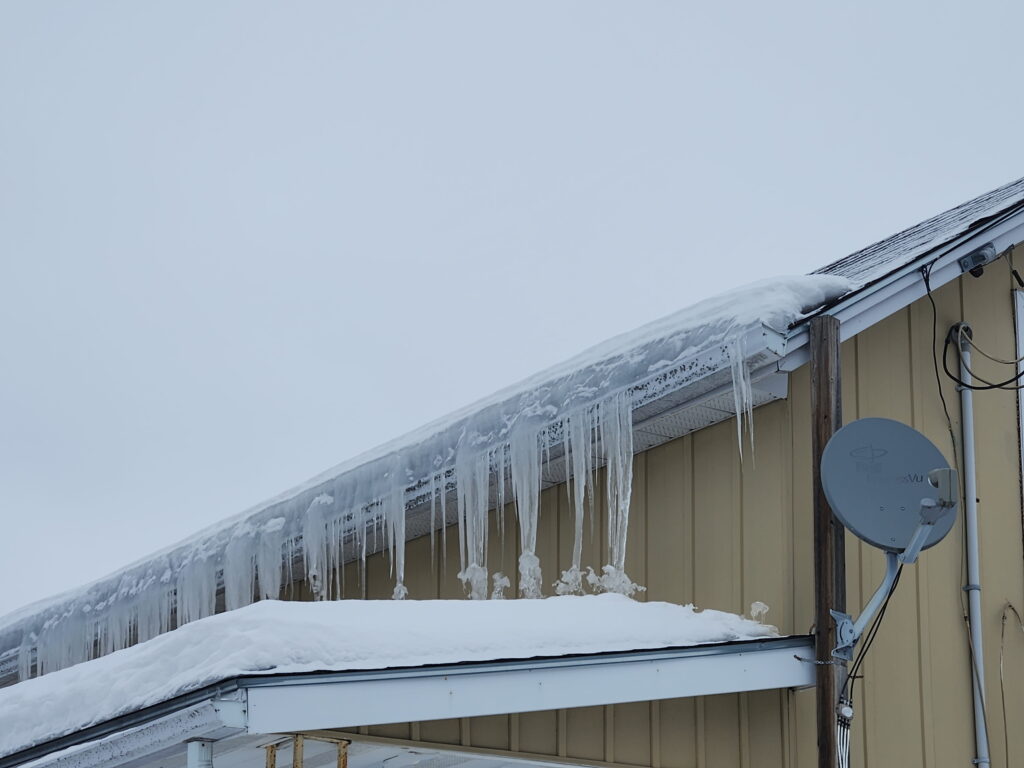
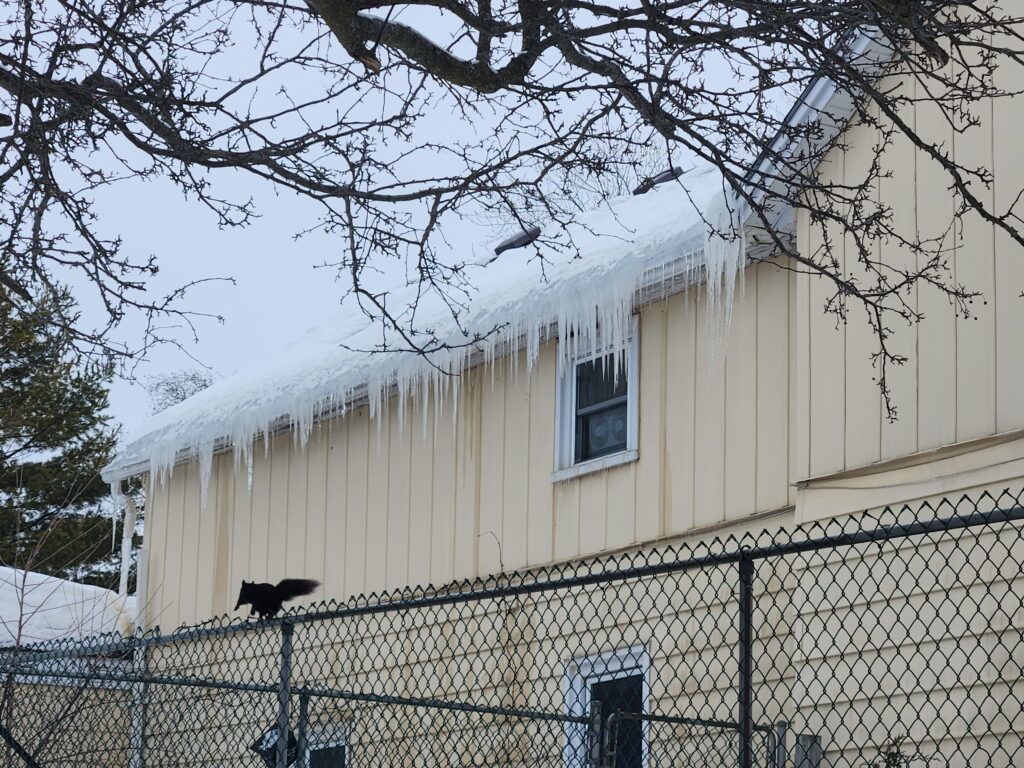
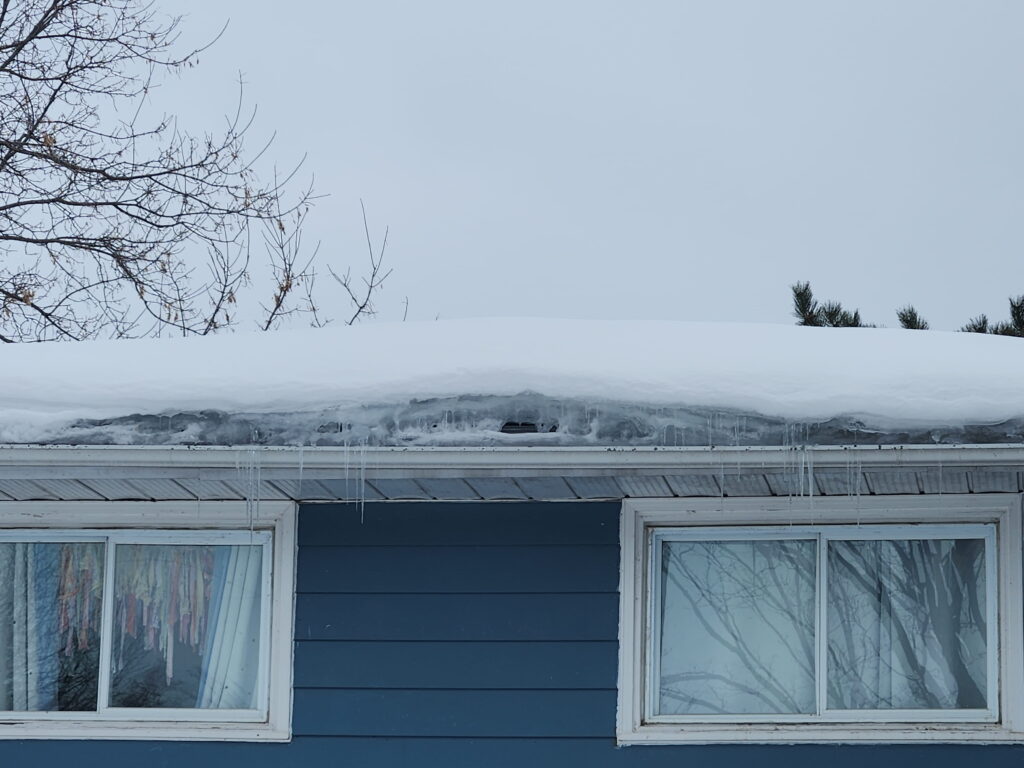
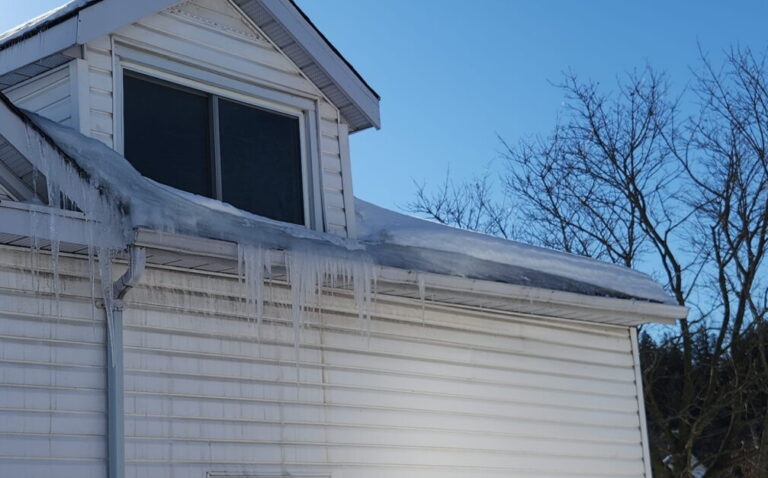
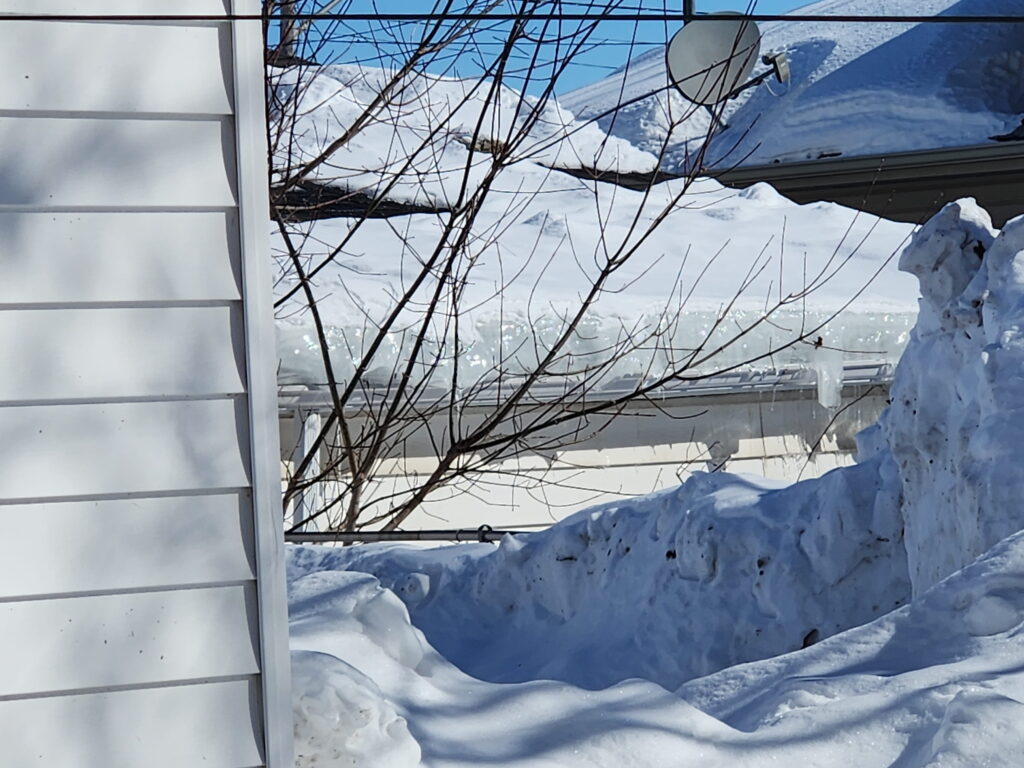
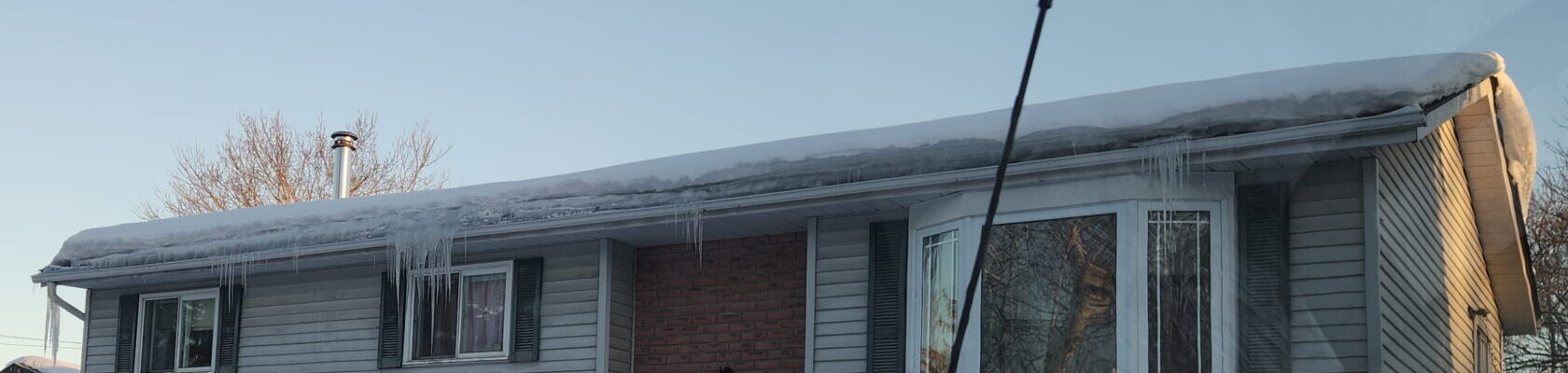
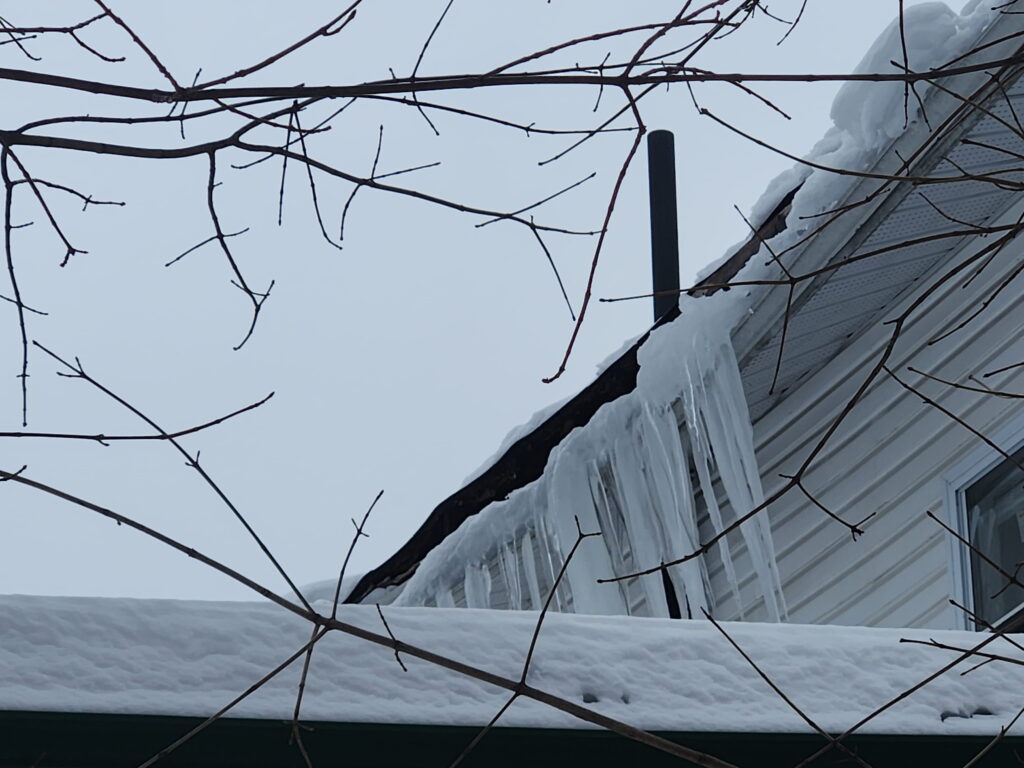
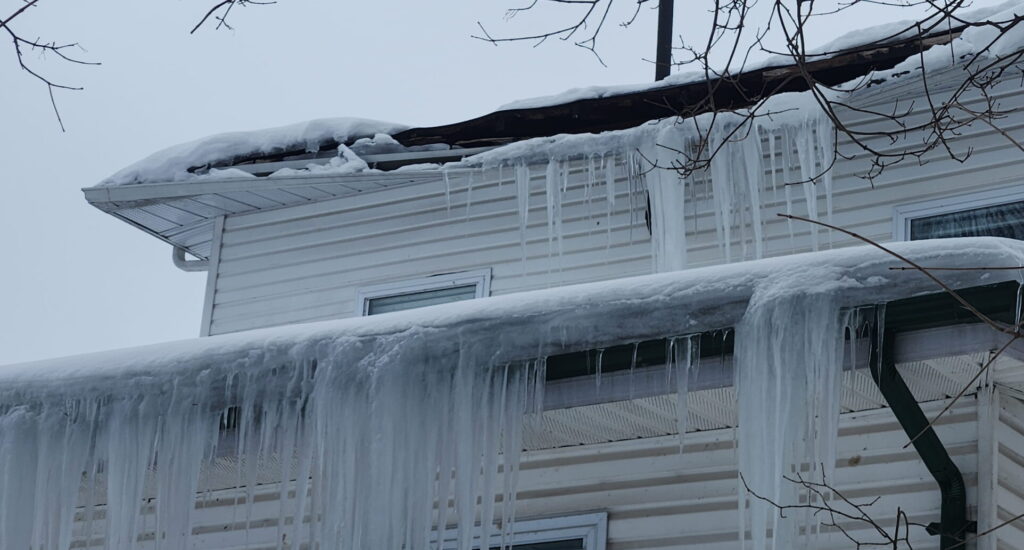
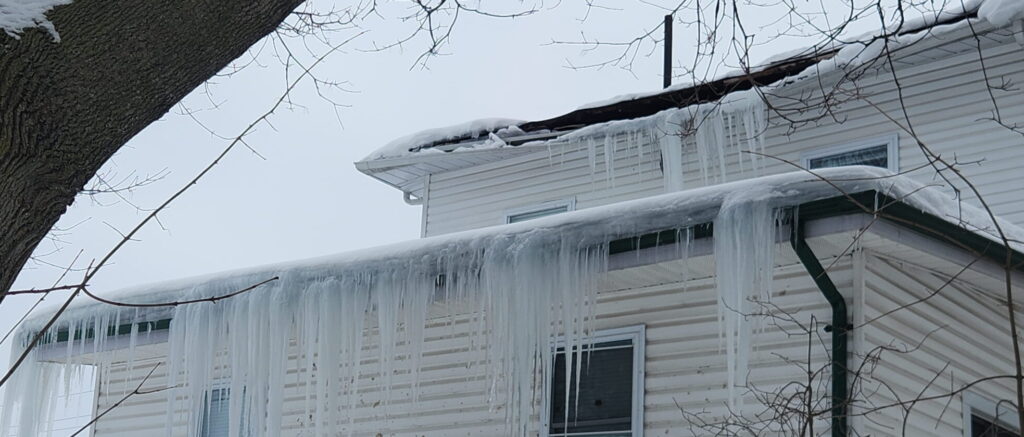
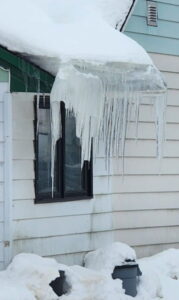
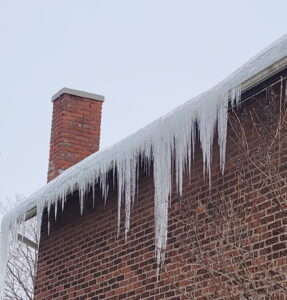
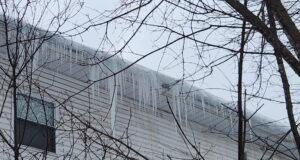
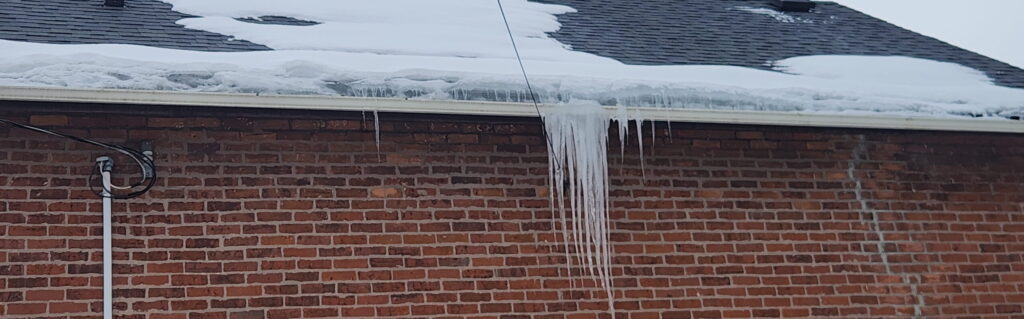
Over the past few weeks, after the heavy snowstorm in Trenton, Belleville, and Quinte West, we’ve seen a significant increase in ice dam roof problems in Trenton on residential homes.
Large icicles hanging from eaves may look harmless — but they are often a warning sign of a much bigger issue. Ice dams can cause roof leaks, ceiling damage, insulation problems, and costly repairs if not addressed properly.
Here’s what homeowners in our area need to know.
What Causes Ice Dams on Roofs in Trenton?
An ice dam forms when:
Snow accumulates on your roof
Heat from the attic melts the snow
Melted water runs down the roof
The water refreezes at the colder roof edge
Ice builds up and traps additional melting water behind it
When this trapped water backs up under shingles, it can leak into your home.
This is when we start seeing:
Water stains on ceilings
Peeling paint or drywall bubbling
Wet insulation in the attic
Mold risks developing
Why Ice Dams Happen in Trenton & Belleville
Many homes in our area — especially older homes — are vulnerable to ice dam formation.
The main causes include:
1. Poor Attic Insulation
If insulation levels are too low, heat escapes from the living space into the attic. That heat warms the roof deck, causing snow to melt unevenly.
2. Poor Attic Ventilation
Without proper airflow, warm air becomes trapped in the attic, increasing roof surface temperatures and accelerating melt/freeze cycles.
3. Air Leaks in the Ceiling
Pot lights, attic hatches, plumbing penetrations, and poorly sealed areas allow warm air to escape into the attic.
4. Uneven Roof Temperatures
When the upper roof is warm and the lower roof edge is cold, it creates the perfect conditions for ice dams to form.
Warning Signs of an Ice Dam Problem
If you notice any of the following, your roof may be at risk:
Large icicles hanging from gutters
Thick ice buildup along roof edges
Ice forming behind gutters
Water staining on interior ceilings
Damp attic insulation
Leaks after snow begins melting
Ignoring these signs can lead to drywall damage, insulation replacement, and even structural rot.
How to Prevent Ice Dams on Your Roof
Preventing ice dams requires addressing the root cause — not just removing the ice.
Improve Attic Insulation
Ensuring proper insulation levels helps keep heat inside your home and prevents uneven roof melting.
Upgrade Ventilation
Proper soffit and ridge ventilation allows cold air to flow through the attic, keeping the roof surface temperature consistent.
Seal Air Leaks
Sealing gaps around attic access points, electrical penetrations, and top plates reduces heat transfer into the attic.
Ice & Water Membrane: Why It Matters
One of the most important protective measures during a roof replacement is the installation of an ice and water membrane (also known as ice & water shield).
This waterproof membrane is installed along:
Roof eaves
Valleys
Vulnerable transition areas
If water backs up under shingles, the membrane provides a secondary waterproof barrier that protects the roof deck and interior of the home.
Safe Snow Removal
Removing excess snow buildup carefully can reduce risk — but chipping at ice can damage shingles and should be avoided.
Proper Roof Design Matters
Roof slope, overhang size, and ventilation layout all affect ice dam formation. During roof replacement, we assess these factors to reduce long-term risk.
Roof Replacement & Ice Dam Protection
If your roof has experienced repeated ice dam damage, it may be time to consider replacement.